The Ram Mandir in Ayodhya has become more than just a temple,it now symbolizes faith, culture, and India’s spiritual heritage. Among the many rituals and traditions linked to this sacred site, the flag hoisting, or “Dhwajarohan,” at Ram Mandir has emerged as one of the most inspiring and emotional events in recent memory. This is one of the most revered devotional temples in India, attracting people from all over the world.
When and by Whom
On 25 November 2025, the saffron flag, known as Dharma Dhwaj, was ceremonially hoisted atop the spire of the Ram Mandir. The Prime Minister of India, Narendra Modi, led the official “Dhwajarohan” ceremony.He was joined by senior dignitaries, including Rashtriya Swayamsevak Sangh (RSS) chief Mohan Bhagwat, along with the Governor and Chief Minister of Uttar Pradesh.
The event coincided with the auspicious “Vivah Panchami,” which is celebrated as the divine wedding day of Lord Ram and Goddess Sita. It took place during the sacred “Abhijit Muhurat,” a time considered very favorable for spiritual ceremonies.This flag-hoisting marked the formal completion of the temple’s construction. It represents a significant milestone after decades of devotion, struggle, and faith for many devotees.
What the Flag Symbolizes
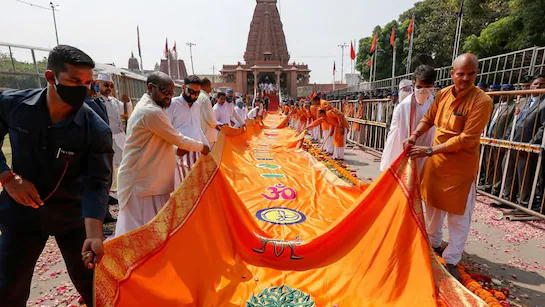
The flag includes sacred symbols: the radiant Sun, representing lineage and courage; the sacred “Om,” the primordial spiritual sound; and the Kovidara tree, a mythological symbol linked to harmony, righteousness, and ancient traditions. Together, these elements signify a revival of old customs, dharma, and cultural heritage.
Hoisting this flag from the temple’s highest point declares that the temple is now fully consecrated, active, and open, serving as a beacon for devotees and pilgrims.
A Moment of Collective Faith
Many described witnessing the Dhwajarohan at Ram Mandir as deeply moving and spiritually uplifting. As the flag rose on the 42-foot staff, temple bells rang, conches sounded, and Vedic chants echoed across the grounds, creating an atmosphere filled with reverence and devotion.
Thousands, including pilgrims, saints, officials, and dignitaries, stood with folded hands. For many families, this was the realization of a dream spanning generations. For children, it was a moment of awe and wonder; for devotees across the country, it was a powerful symbol of renewed faith.
In that moment, the saffron banner fluttering atop the Ram Mandir felt less like a flag and more like a promise: that dharma, devotion, and unity persist beyond time.
Why This Ceremony Matters
Beyond its spiritual and emotional significance, the flag hoisting formally marks the completion of the temple, which began construction after the foundation stone was laid in August 2020.
Today, the Dhwajarohan opens a new chapter one where Ram Mandir is fully realized and welcoming devotees from India and around the world. The raised flag stands as a constant symbol of hope, sanctity, and spiritual renewal.For anyone visiting Ayodhya, seeing the saffron flag flutter above Ram Mandir is more than a ritual; it is a memorable moment that connects you to centuries of faith, culture, and devotion.