Introduction: The Gateway to Salvation Gets a New Look
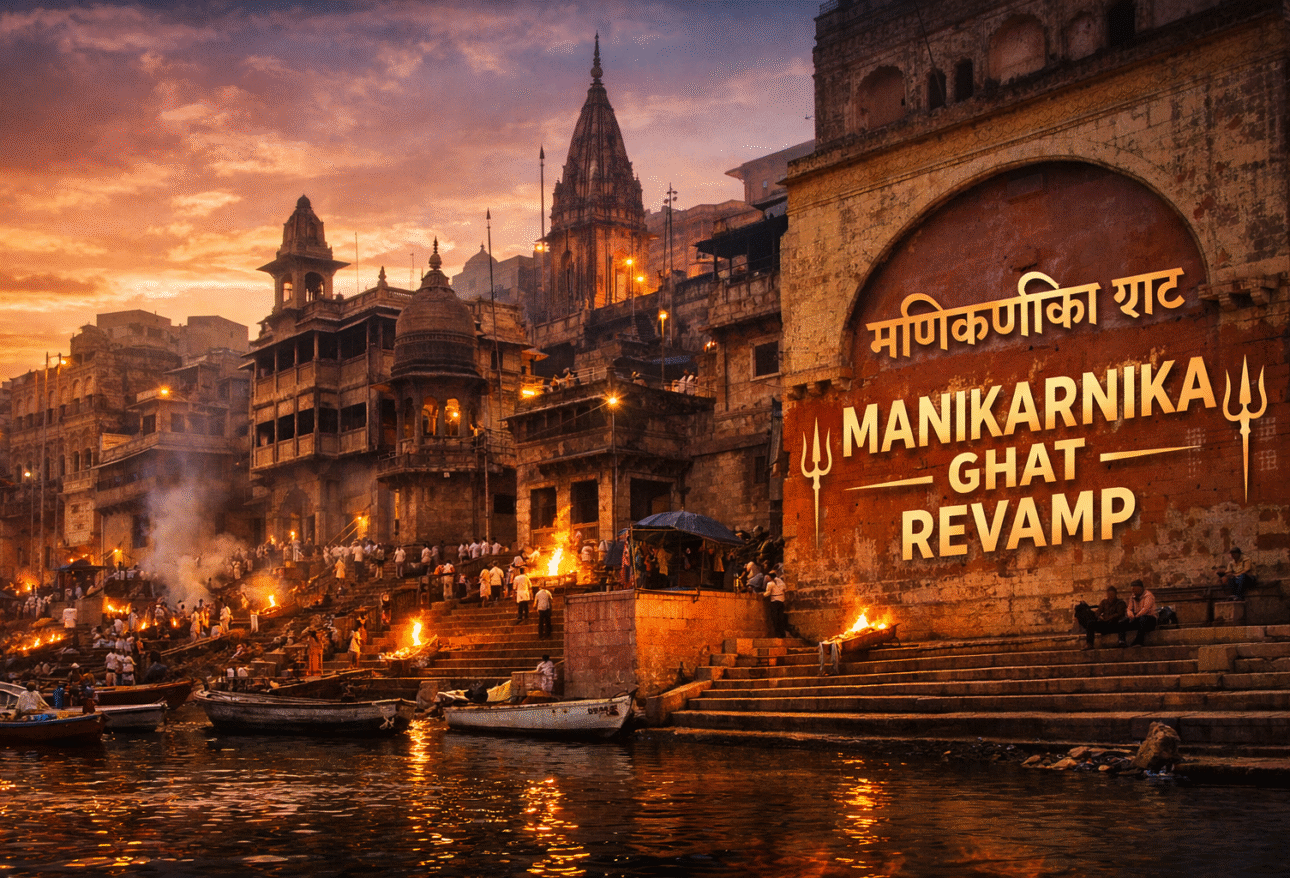
Varanasi’s iconic Manikarnika Ghat, one of Hinduism’s holiest cremation grounds, is undergoing a massive transformation that has captured national attention. This comprehensive redevelopment project aims to modernize facilities while preserving the sacred character of this ancient site where millions believe cremation leads to moksha, or liberation from the cycle of rebirth.
What is the Manikarnika Ghat Revamp Project?
Prime Minister Narendra Modi laid the foundation stone for the Manikarnika Ghat redevelopment project on July 7, 2023, during his visit to Varanasi. The ambitious initiative, with a budget of Rs 17.56 crore, represents the next phase of Varanasi’s spiritual infrastructure development following the successful Kashi Vishwanath Corridor project.
Key Features of the Redevelopment
Infrastructure Enhancements:
- Construction of a grand corridor connecting Manikarnika Ghat to Scindia Ghat
- Improved platforms for cremation ceremonies with better organization
- Installation of a tall chimney for proper ash disposal to address concerns about ash spreading to nearby residential areas
Visitor Amenities:
- VIP seating areas on rooftop platforms
- Enhanced viewing areas for pilgrims and visitors
- Improved accessibility with ramps and pathways
- Better seating arrangements throughout the complex
Special Facilities:
- A dedicated wood plaza where families can procure cremation materials
- Flood-resistant design to ensure continuous operations during monsoon season
- CCTV surveillance for enhanced security
Heritage Restoration: The project includes restoration of the Chakra Pushkarani Kund, the Ratneshwar Mahadev Temple, the Tarkeshwar Temple, and the Dattatreya Paduka.
Why Manikarnika Holds Special Importance
Manikarnika Ghat is not just another cremation ground. It’s considered the holiest of all cremation sites in India, where Hindu devotees believe that Lord Shiva himself whispers the Taraka Mantra into the ear of the deceased, granting them salvation.The ghat operates continuously, with funeral pyres burning day and night throughout the year. It’s believed to be one of the oldest and most continuously active cremation grounds in the world, witnessing the cremation of hundreds of thousands of bodies annually.
The Spiritual Connection
According to Hindu mythology, the name “Manikarnika” comes from “Manikarna,” meaning ear ornaments in Sanskrit. Legend has it that Mata Sati’s ear ornament fell at this spot, making it one of the 51 Shakti Peethas, sacred sites connected to the goddess Shakti
Recent Developments
As of January 2026, demolition work using heavy machinery has been intensified to develop the Manikarnika pilgrimage site into a grand corridor. The administration has confirmed that the redevelopment has entered its active phase, with visible changes occurring at the historic site.
Varanasi District Magistrate Satyendra Kumar has clarified that all artworks and sculptures present at the ghat are fully under the protection of the Department of Culture and will be restored. The administration has emphasized that no temples or significant cultural structures are being demolished, addressing concerns raised by various groups.
The Controversy: Modernization vs. Heritage Preservation
The redevelopment has not been without controversy. Protests erupted at the Manikarnika Ghat after officials began a demolition drive, with locals alleging that the city’s heritage was being destroyed in the name of redevelopment.
Key concerns raised by protesters include:
- Alleged damage to ancient structures and consecrated idols
- Loss of the authentic character of Varanasi’s narrow lanes
- Fear of commercialization of sacred spaces
- Introduction of “VIP culture” at a place meant to symbolize equality in death
The district administration has cautioned the public against misinformation being spread through viral photos and AI-generated videos on social media. Officials maintain that the project addresses genuine challenges faced at the ghat, including space shortages, cleanliness issues, and inadequate facilities for grieving families.
Current Challenges at Manikarnika Ghat
Manikarnika Ghat witnesses the cremation of lakhs of bodies every year and faces several challenges, including a shortage of space, cleanliness, and maintaining proper arrangements.
Practical Issues Being Addressed:
- Overcrowding during peak times
- Sanitation and hygiene concerns
- Lack of organized facilities for purchasing cremation materials
- Difficulties for elderly visitors and people with disabilities
- Ash disposal affecting nearby residential areas
- Vulnerability to flooding during monsoon season
The project attempts to reconcile the need for modern infrastructure with the preservation of spiritual authenticity. The flood-resistant design, for instance, ensures that cremation services remain uninterrupted during Varanasi’s frequent floods, a practical necessity that doesn’t compromise the ghat’s sacred purpose.
Following the Kashi Vishwanath Corridor Model
The Manikarnika project follows the successful Kashi Vishwanath Corridor project, which transformed the area around the famous temple while maintaining its spiritual essence. The corridor project has been widely appreciated for improving pilgrim experience while preserving the temple’s sanctity.
The administration’s master plan is to streamline and widen the area from Manikarnika Ghat to Scindia Ghat, including better facilities for pilgrims, easier access and strengthening connectivity to Scindia Ghat. This comprehensive approach aims to create a cohesive riverfront experience while respecting each ghat’s unique character.
What Visitors Can Expect After the Revamp
Improved Accessibility:
- Better pathways and ramps for elderly pilgrims
- Clearer signage and designated areas
- Organized spaces for rituals and ceremonies
Better Facilities:
- Clean and well-maintained viewing areas
- Proper seating arrangements
- Improved safety with CCTV surveillance
- Organized wood plaza eliminating chaos during sensitive times
Despite modernization, the essential spiritual character and continuous cremation traditions will remain intact, ensuring the ghat continues to serve its sacred purpose. The project, initiated in July 2023, is currently in its active implementation phase. While specific completion dates have not been officially announced, the administration has indicated that work is progressing according to plan. Visitors should take necessary steps before going to ghats and can take advice from the locals and experts for smooth travel plan.